목차
Three families at a glance
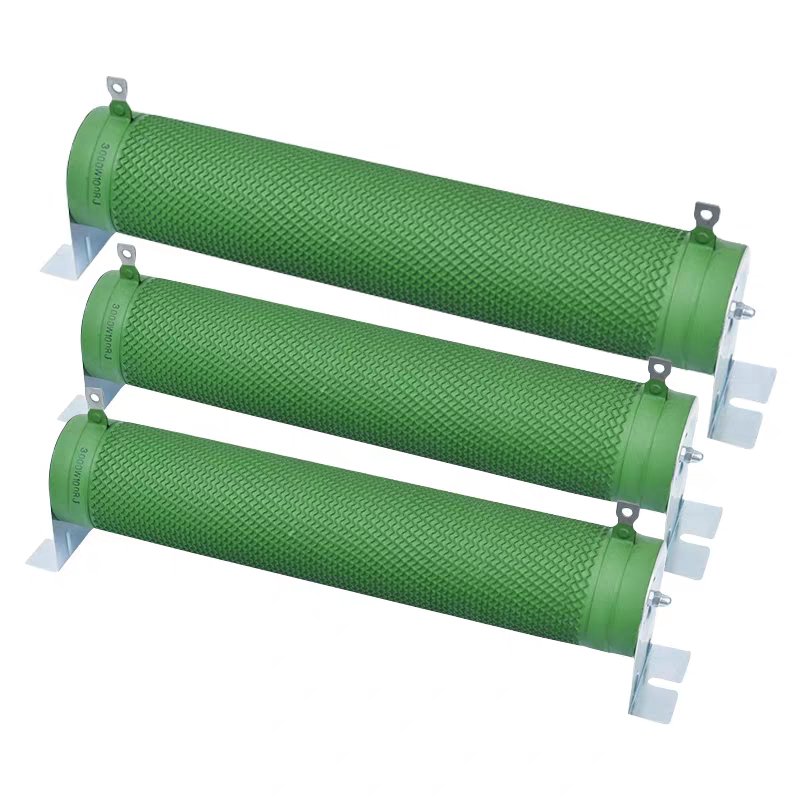
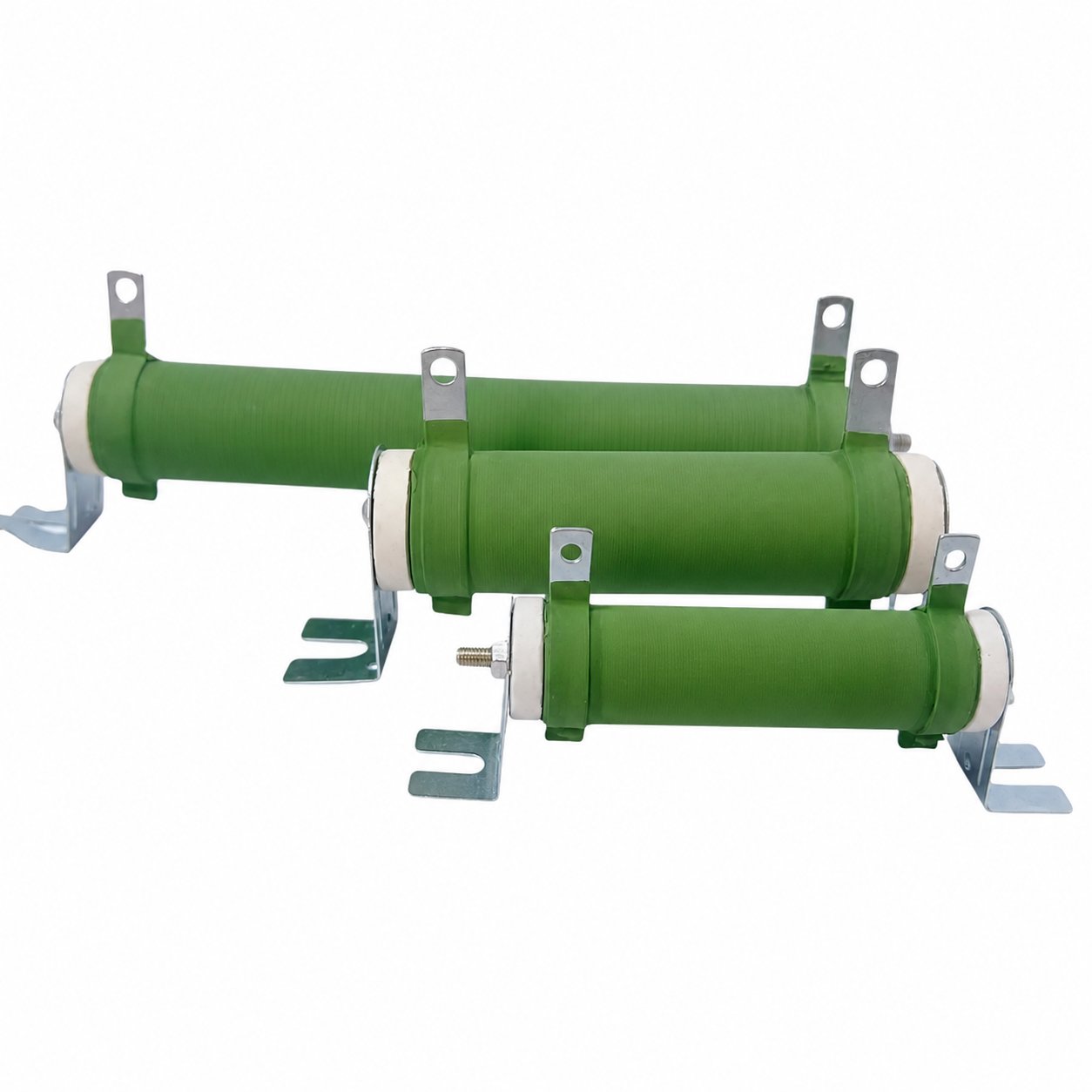
Most industrial power-resistor projects end up choosing between three families: aluminum housed, cement (sometimes called ceramic cased or SQP) and tubular wirewound. They look superficially similar on a datasheet — all three can dissipate tens of watts, all three can be made non-inductive — but the underlying construction is so different that picking the wrong family will either inflate your BOM cost or hand you a thermal-fatigue field-return rate you would rather not deal with.
This guide is for design engineers and procurement staff who have already narrowed the choice down to two or three candidates and need a defensible decision rationale. We cover the same parameters you would compare on a Vishay or Ohmite selection page, plus three real case studies and the mistakes that show up most often in failure-analysis reports.
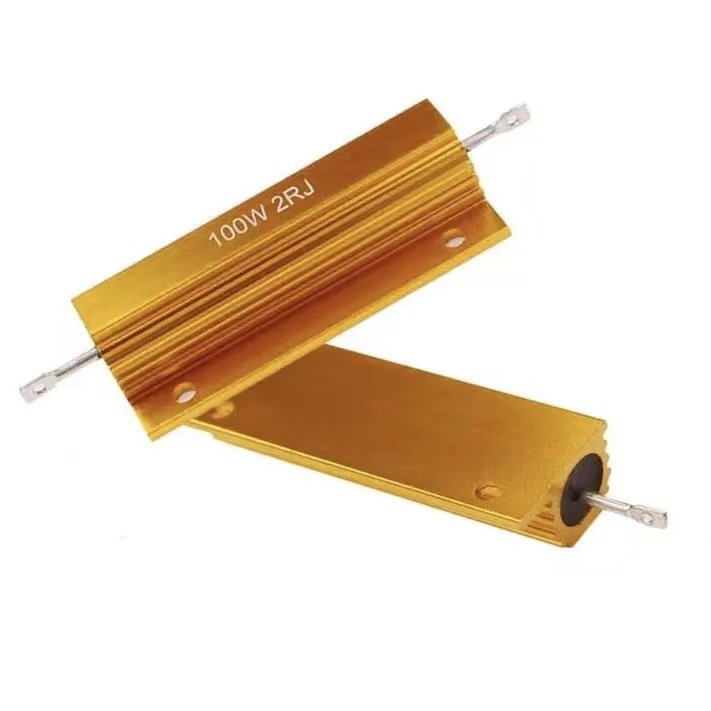
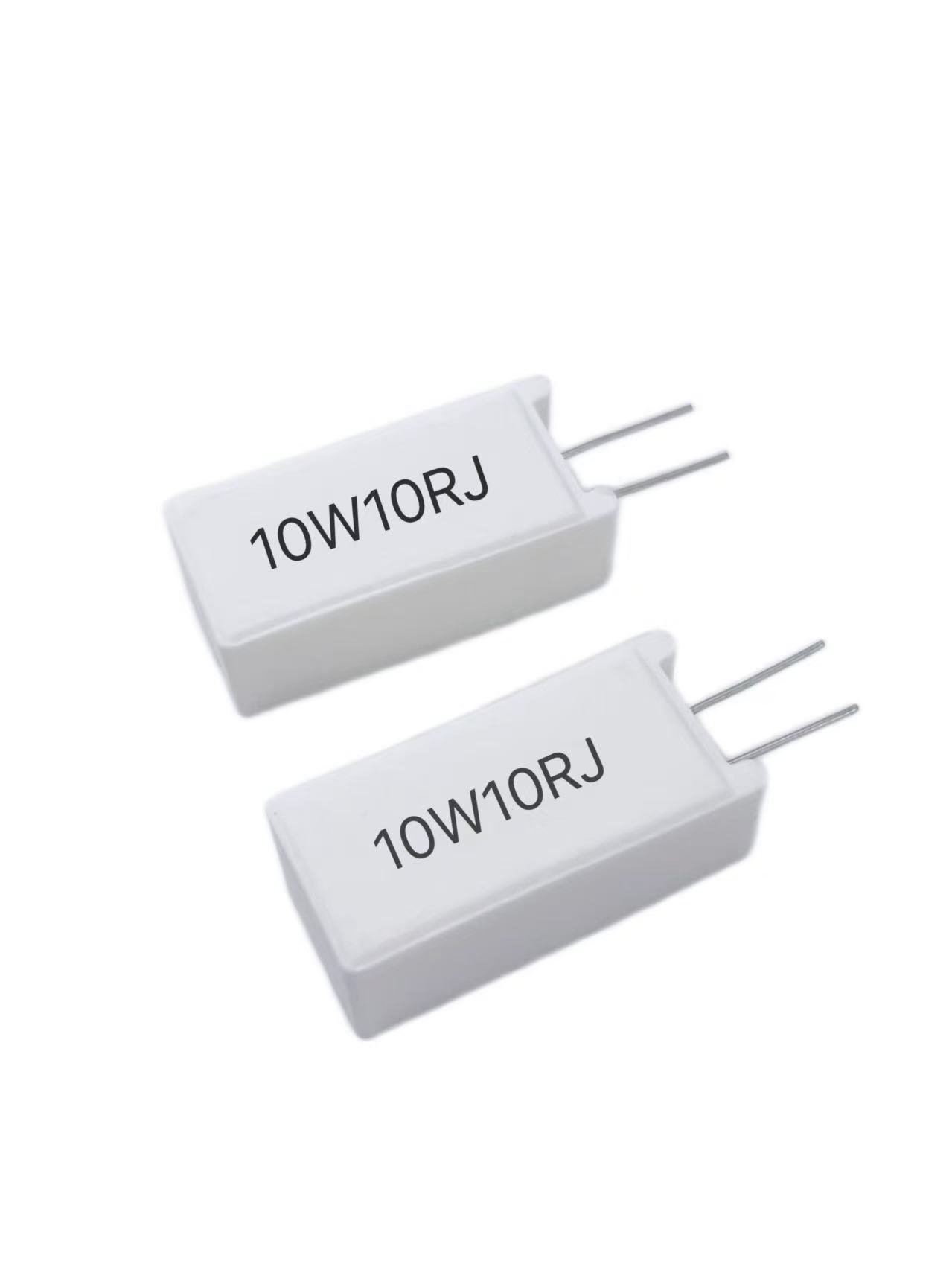
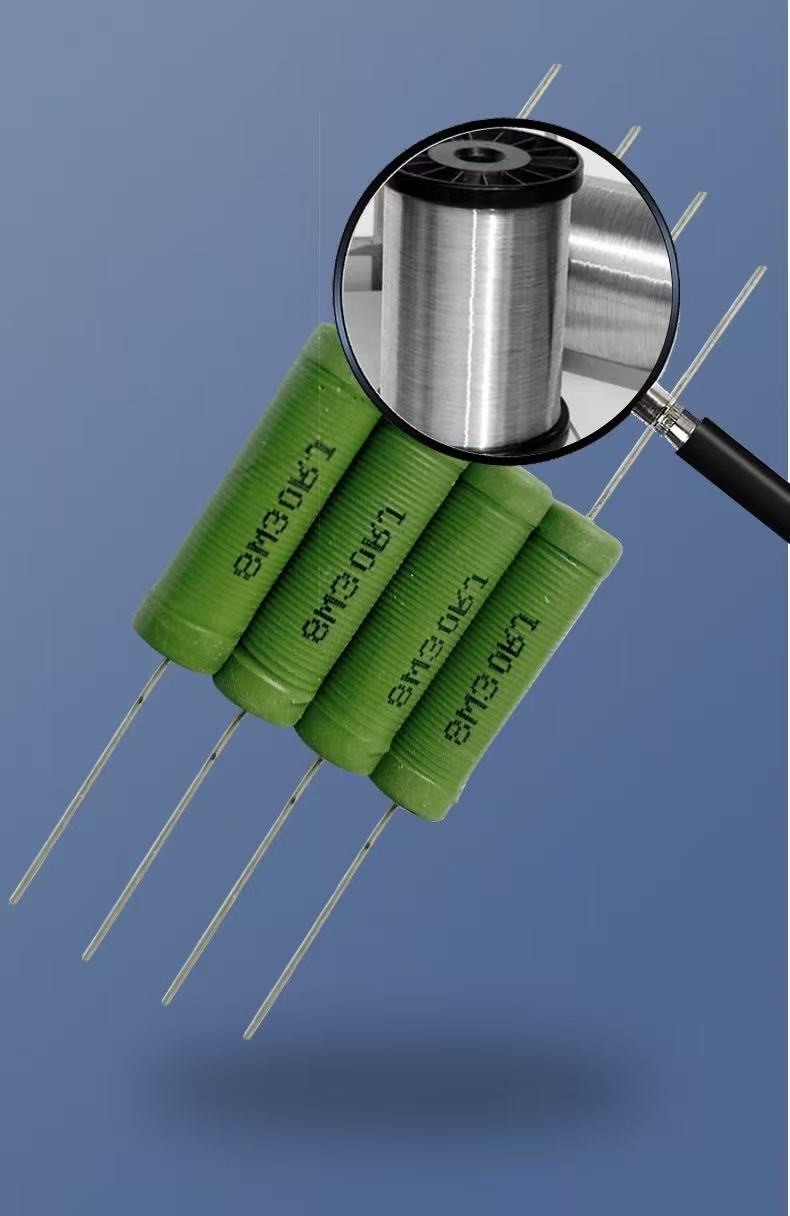
The short version: aluminum housed wins on watts-per-cubic-centimeter when you have a heatsink available; cement wins on cost-per-piece in board-mount circuits below 25 W; tubular wirewound wins on absolute power and pulse handling whenever you can give it free air. Everything beyond that is engineering nuance, which is what the rest of this article unpacks.
12-parameter comparison table
The numbers below reflect mainstream commercial-grade product lines from Hongyi, Vishay, Ohmite, TE Connectivity and Caddock. Specialty products (e.g. Caddock MP series film-on-substrate or precision foil) sit outside these ranges and are called out where relevant. Read the table as “what you can reasonably specify on a 2026 datasheet without paying NRE for a custom build.”
| Parameter | Aluminum housed | Cement (SQP) | Tubular wirewound |
|---|---|---|---|
| Typical power range | 25 W – 1000 W (heatsinked) | 1 W – 25 W (free air) | 5 W – 1000 W (free air) |
| TCR (temperature coefficient) | ± 50 to ± 300 ppm/°C | ± 200 to ± 500 ppm/°C | ± 20 to ± 100 ppm/°C (±5 ppm for precision) |
| Tolerance | ± 1 % to ± 10 % | ± 5 % to ± 10 % | ± 0.1 % to ± 5 % |
| Operating temp range | −55 °C to +200 °C (case) | −25 °C to +200 °C (body) | −55 °C to +350 °C (hot-spot) |
| Mounting | Chassis / heatsink, M3-M5 bolts | PCB through-hole, axial leads | Chassis bracket, ring terminals |
| Inductance | Low (non-inductive option common) | Low (under 1 µH typ.) | Moderate (inductive); bifilar option for non-inductive |
| Cost per watt | $0.05 – $0.15 / W | $0.02 – $0.08 / W | $0.04 – $0.20 / W |
| Lifetime / MTBF | 200k–500k h at 50 % derating | 50k–150k h at 50 % derating | 300k–1M h at 50 % derating |
| Heat dissipation | Conductive — needs heatsink + TIM | Convective + radiative | Convective + radiative; forced-air for > 200 W |
| Vibration tolerance | Excellent (20 g, IEC 60068-2-6) | Fair — leads fatigue under shock | Good with proper bracket; verify resonance |
| Form factor | Compact rectangular block, low profile | Slim ceramic body, axial leads | Long tubular, needs clearance length |
| Best applications | VFD/servo braking, EV chargers, regen circuits | LED drivers, inrush limit, snubbers, SMPS | Industrial braking, load banks, motor test, rail traction |
A few rows deserve commentary. The TCR row is highlighted because it is where the three families diverge most sharply: precision wirewound can hit ± 5 ppm/°C, two orders of magnitude better than commodity cement. If your circuit drifts > 0.1 % over the operating temperature range and that matters (current sense, voltage divider, calibration standard), the conversation ends at wirewound. See IEC 60115 for the formal test conditions behind the TCR number on a datasheet — vendors do not all use the same reference temperatures, so when in doubt, ask.
The cost-per-watt row is unintuitive: cement looks cheapest at piece-price but the cost-per-watt-dissipated gap narrows once you account for board area, the fact that you typically need several cement parts in parallel to match one aluminum-housed unit, and the heatsink cost the aluminum-housed unit avoids by reusing existing chassis metal.
Decision flowchart
A datasheet table can answer the question “is this part capable?” but not “is this the right family for my application?” The flow below is the screening logic we run every customer-spec through before quoting. Five branches; less than a minute end-to-end.
Step 7 is where the answers collapse into a family choice. The decision matrix is short enough to memorize:
Cost vs performance breakdown
Procurement teams often ask “why is cement so much cheaper if aluminum housed is better?” The honest answer is that they are optimized for different cost drivers. Cement is optimized for piece-price at low power; aluminum housed is optimized for watts dissipated per dollar of total BOM once you account for board real estate and heatsink reuse.
To make this concrete, here is a 100 W dissipation budget priced three ways for a hypothetical industrial product manufactured in quantities of 10,000 per year. Prices are 2026 distributor-level for mainstream Asian-manufactured parts; specialty distributors like Mouser and Digi-Key carry the same parts at slightly higher per-piece cost.
| Parameter | Aluminum housed 100 W | Cement 5 W × 20 | Wirewound RX21 100 W |
|---|---|---|---|
| Resistor BOM | $3.50 / unit | $0.30 × 20 = $6.00 | $2.80 / unit |
| Heatsink / hardware | Reuse chassis, $0 | n/a | Mounting bracket $0.80 |
| PCB area | 0 cm² (off-board) | ≈ 30 cm² | 0 cm² (off-board) |
| Assembly labor | 2 screws, 30 s | 20 reflow joints | 4 ring lugs, 60 s |
| Total per finished product | $3.50 + 30 s | $6.00 + 30 cm² PCB | $3.60 + 60 s |
At very low power (< 5 W per node) cement is unbeatable: a single 5 W SQP costs less than $0.30 and assembles in the same reflow pass as the rest of your board. At very high power (> 500 W), purpose-built corrugated wirewound takes over because heatsink mass becomes prohibitive. Aluminum housed dominates the 25–500 W band almost universally.
A subtle point that procurement often misses: the cement column's “20 parts in parallel” is not just a BOM cost — it is also 20 solder joints, 20 tolerance contributions to current sharing, and 20 potential drift trajectories over the product's service life. Reliability scales with the number of interconnections. A single 100 W aluminum housed unit with two M4 bolts has four mechanical interfaces (two bolts, two terminals); twenty cement parts have at least forty. For a 10-year industrial deployment that distinction shows up directly in the warranty curve.
Conversely, sourcing risk runs the other way. A single aluminum-housed unit means single-source dependency unless you qualify a drop-in alternate. Twenty cement parts come from a deep commodity supply chain — any of a dozen factories can ship to spec next week. For products with long lifecycles (industrial, rail, defense), this matters. The right answer often involves dual-sourcing the critical aluminum-housed part to a backup vendor before production launch, not after.
Three real case studies
Names and exact specifications are anonymized but the project shapes are pulled directly from 2025 customer files. Each case lists the requirement, the family chosen, why, and the deployment outcome.
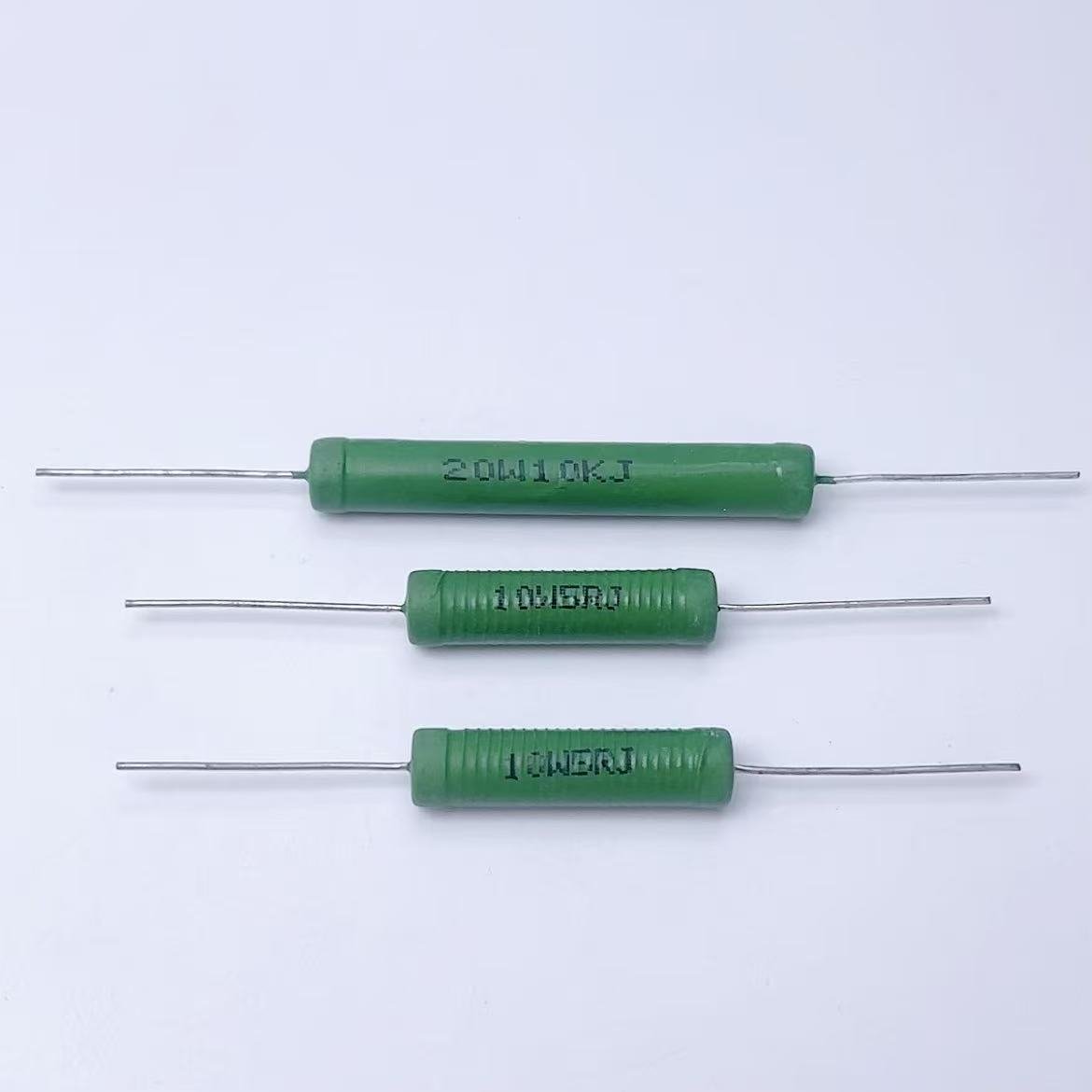
Across all three cases, the same screening logic from the decision flow produced the right answer in under two minutes. The cases differ on peak/average ratio, mounting environment and volume economics — the three variables that swing the family choice.
Three common selection mistakes
The mistakes below account for roughly 70 % of resistor-related field returns we see at the Hongyi application-engineering desk. None of them are exotic. All of them are avoidable with a five-line calculation on the back of a Post-it.
Mistake #1 — Sizing by average power without checking peak
The most common selection error, by a wide margin. A 100 W resistor rated for 100 W continuous dissipation will not survive a 500 W pulse for 1 s, even though the energy per pulse is just 500 J (a single pulse, average over a 60 s window is 8.3 W). The reason: peak temperature inside the resistive element scales with instantaneous power, not average. The element fractures from a single overload event, not from cumulative heating. The math is brutally simple: a 100 W resistor with a 50 g alloy element has roughly 25 J/°C of thermal mass; dump 500 J into it over 1 s and the element climbs 20 °C above whatever temperature it already sat at when the pulse arrived. Do that repeatedly with insufficient cool-down and you accumulate damage.
Fix. Always calculate both. Average power for sizing the steady-state heatsink path; peak energy for sizing the thermal mass of the element. Vendors publish single-pulse overload curves for exactly this reason — read them. Plot your worst-case pulse on the same axes as the vendor's overload limit and confirm a 2× margin in energy. If the vendor does not publish pulse curves at all, treat that as a red flag and pick a different supplier.
Mistake #2 — Choosing wirewound for an HF circuit without the non-inductive option
Standard tubular wirewound is, well, a wire wound around a tube. The parasitic inductance can be 5–50 µH, easily enough to inject ringing into a 100 kHz buck-converter sense path or to dominate the impedance of an RF snubber. We have seen engineers spec wirewound for an EMI compliance fix and then make their EMI worse.
Fix. If the circuit operates above ~100 kHz, ask your vendor for the bifilar non-inductive winding option. Two wires wound side-by-side in opposite directions cancel the magnetic field; parasitic inductance drops to under 1 µH. Aluminum housed and SQP cement are inherently lower-inductance alternatives at the same wattage. For very high frequency (> 1 MHz) and precision combined, look at film-on-substrate parts — they trade power density for clean impedance up to tens of MHz. Whatever you pick, validate the impedance with a network analyzer before committing to layout; datasheet inductance figures are measured at one frequency and one drive level, and your circuit will not see those conditions.
Mistake #3 — Specifying cement for a sealed enclosure
Cement resistors dissipate heat by convection from the body surface and radiation. In a sealed enclosure with no airflow, the body temperature climbs without limit. We routinely see datasheet-rated 25 W cement parts measured at 220 °C body temperature inside IP67 boxes that the customer assumed would “just work.” The ceramic body then cracks from thermal expansion against the potting compound.
Fix. In sealed enclosures, derate cement to 30 –40 % of nameplate power, or switch to aluminum housed bolted to the enclosure wall so the wall itself becomes the heatsink. The conductive path through the wall is 10–20× more effective than convection from a cement body trapped in still air. As a general rule, anywhere you would otherwise specify an internal fan for a cement resistor, switch to aluminum housed against the wall instead — you save the fan, the fan cable, the fan-failure mode, and you typically halve the resistor's hot-spot temperature for free. Confirm the wall's thermal resistance to ambient first; sheet steel at 1.5 mm thickness gives roughly 5 °C/W spreading resistance per 100 cm² of contact area, which is plenty for most 50–100 W applications.
For more on what happens when resistors do fail, see our companion article on resistor failure modes and reliability — the five physical failure mechanisms behind every field return. For sizing the high-power braking case specifically, see our braking-resistor sizing guide.